Skip to content
Languageবাংলা32 languages

t("re.hero.eyebrow")

t("re.hero.t")

t("re.hero.lede")

What the institute studies

A model that writes text can be wrong and waste a moment. A machine holding a tool cannot.

Physical AI works under gravity, contact, noise and a clock that does not stop. It is a different problem from the AI most people have encountered, and it fails differently.

Everything the institute builds is published in the open and free to run. Simulations run in an ordinary browser on a student's own device: no licence, no install and no data centre, which matters wherever equipment budgets are thin.

32publications, all free to download: 28 technical reports, 2 open specifications and 2 defensive disclosures
21open research topics
20courses, with runnable exercises
159instruments and simulations, indexed and searchable

Every figure above is checkable at physicalai-bmi.org. Publications carry a verification grade, and results the institute has not independently confirmed are marked as such.

Three laboratories

The Glass Lab

Airspace integration, aviation training, and the STEM workforce.

The Glass Lab's subject is the same subject as the institute's aviation programmes, which is why the research and the teaching are held in one institution.

The Hiner Lab

Uncrewed aircraft in the field.

Logistics, search and rescue, last-mile delivery and coastal surveillance. Aircraft doing work, in conditions that do not cooperate.

The Charlot Lab

Provable, physically grounded AI.

Intelligence that runs on the device rather than in a data centre, and can show why its next action is safe before it takes it.

Flagship work

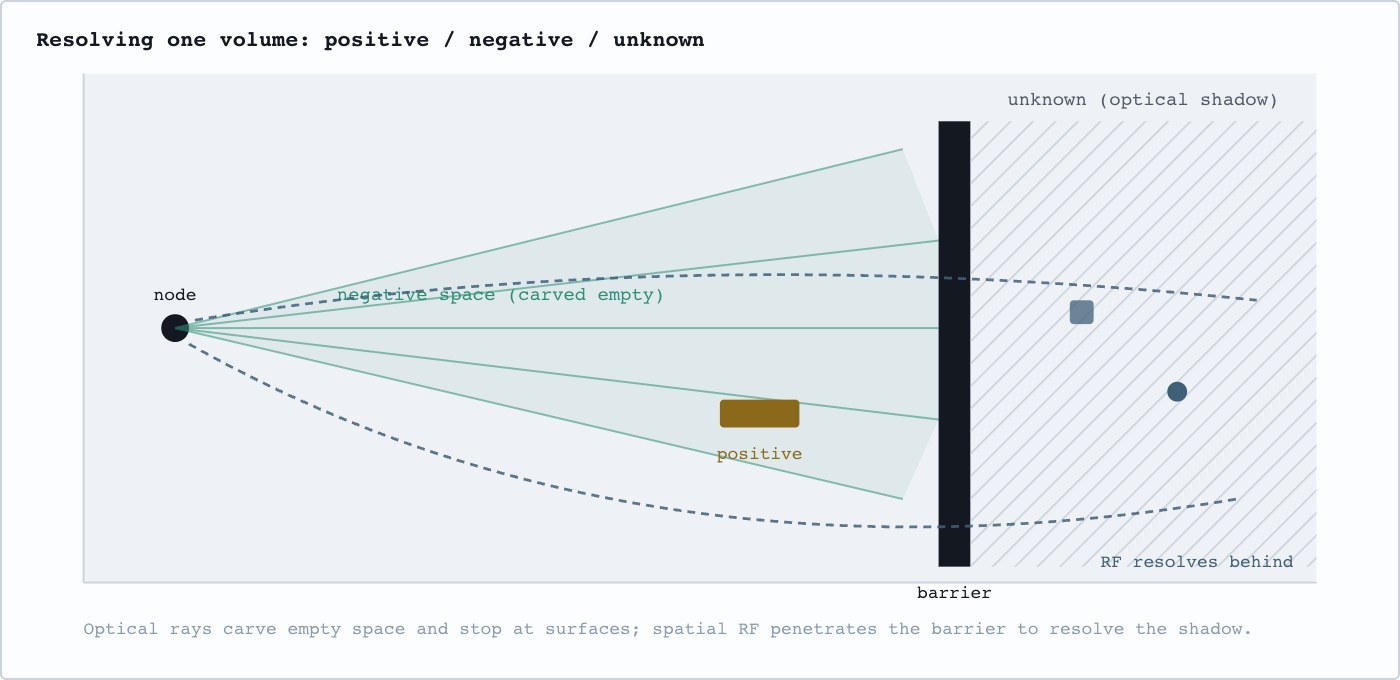
Diagram showing optical rays carving empty space and stopping at a barrier, with radio frequency resolving the shadow behind it.

Optical rays carve empty space and stop at surfaces; spatial RF penetrates the barrier to resolve the shadow.

OmniSense: projected perception

Where a system is, and what is around it, treated not as an internal picture it carries but as something a mesh of optical and radio-frequency nodes resolves out of a volume, into occupied, empty and unknown.

Read the paper
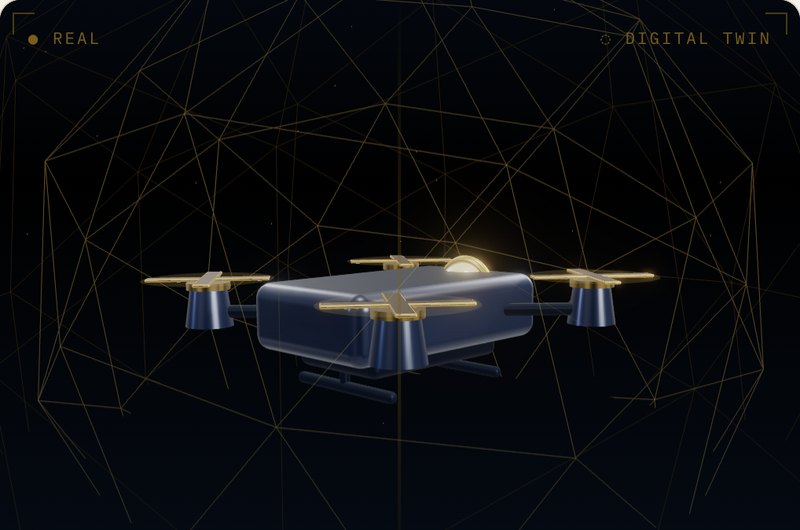
The digital twin of a quadrotor rendered in a wireframe volume, used in coursework.

The digital twin used in coursework and live experiments.

Physical AI in agriculture

US agriculture is counted well at the top and thinly where a machine has to work. This review sizes what physical AI can take on across the estate, the labour market and the logistics layer. Turning over the US machine fleet through new sales alone would take about forty-six years.

Read the paper

Perception and world models

Depth, detection, multimodal fusion.

Manipulation and dexterity

Contact-rich control and tactile sensing.

Learning and sim-to-real

Train in simulation. Survive the real world.

Why a teaching institute runs a research institute

Course material in a fast-moving field goes stale quickly, and buying it in means teaching last year's practice.

The institute writes its own. Research done in the labs becomes the curriculum we teach, and the teaching sends problems back the other way.

Papers, courses, instruments and the live labs are all at the institute itself.